BrahmsString Quintet G major Op. 111
Next · 1 January 2027 · Chamber music concert · Baar (CH)Double bass · Lucerne

Editions / Brahms
Brahms
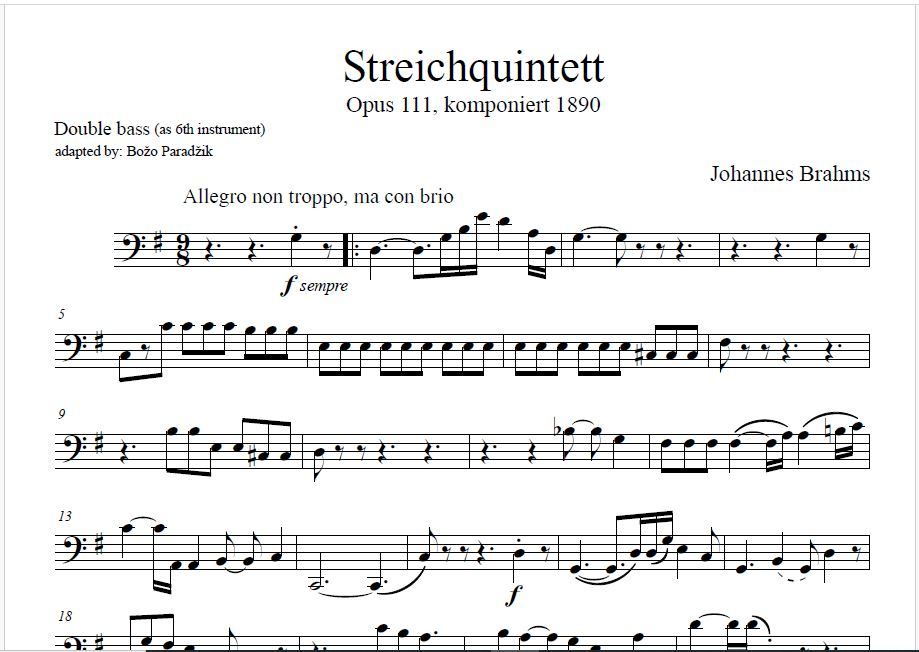
String Quintet G major Op. 111
for double bass
Orchestral (GDAE)
- Included parts
- Double bass as 6th
- Repertoire
- Chamber music
- File format
- PDF | 300 dpi
- Scores
- only double bass part | 13 pages
- Pages
- 13
- Scordatura
- only GDAE (preferably for five-string instruments, or with an extension)
- Source
- first release (Simrock 1891) | double bass part is created by Božo Paradžik
- Score
- other parts are not included, free versions are available in the world web. This double bass part will match all available editions for string quintet and it can also be used in Iain MacPhail's instrumentation for string orchestra, instead of included somewhat too massive double bass part
EUR14
Buy PDFEU customers pay VAT on digital products at the rate of their country. It is added automatically at checkout.
Comments
This part can make now famous Brahms’ quintet to a sextet. Although I know and love since ca 30 years this Brahms’ masterwork, creation of this part, followed by the concert performance in the same week (check the video just below) was rather an unexpected and spontaneous. I was asked to perform in a string orchestra an instrumentation of the quintet adapted for strings. After trying out the included part and knowing the quintet so well, I had a subjective impression that the bass part of this otherwise really excellent instrumentation was often somewhat too massive. So I decided to create a new part and this is it. My main goal in creating this voice was to support the chamber music character of the work without ever converting it into a symphony. Double bass is withdrawing in the delicate moments and it supports the quintet with its natural sound volume where appropriate. In addition, the double bass relieves the cello part considerably in all passages where the balance has become meanwhile even more critical than in Brahms’ time (it is well-known that the balance between the cello and higher string instruments has been the topic in this work since its creation, arguing with Joachim Quartet and other friends are documented in the letters).