BrahmsSonata E minor Op. 38
Next · 1 January 2027 · Chamber music concert · Baar (CH)Double bass · Lucerne

Editions / Brahms
Brahms
Sonata E minor Op. 38
for double bass
Orchestral (GDAE)Solo (AEBF#)F tuning (cGDA)
- Included parts
- Bass part only
- Repertoire
- Bass only
- File format
- PDF | 300 dpi
- Scores
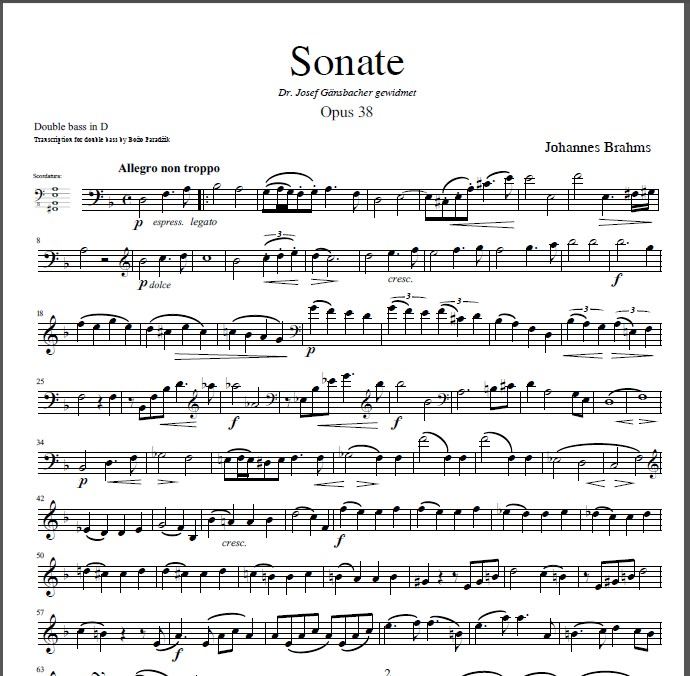
- only Double Bass, three versions | 24 pages - and bonus material 16 pages (see under "BONUS MATERIAL")
- Pages
- 24
- Scordatura
- in F (cGDA), in D (AEBF#) and in C (GDAE)
- Source
- composer's original text | unamended
- Piano part
- not included, but there are many great parts to be found easily even for free in the world web, if necessary. Many pianists own their own piano part of this piece, as it is such a famous composition.
- Bonus material
- this updated release (since August 2021) contains also scanned copies of my own parts (for cGDA and for AEBF#) with all my handwritten markings like fingerings, bowings or articulations. An additional page explains my fingerings system to make the scans as useful as possible.
- Recommended piano scores
- G.Henle Urtext HN1134 (not included) | Bärenreiter Urtext BA9429 (not included) | Wiener Urtext UT50039 (not included) - every piano part should match this edition.
EUR14
Buy PDFEU customers pay VAT on digital products at the rate of their country. It is added automatically at checkout.
Comments
My own experience with this piece was rich: I have played it first with AEBF# (“solo” tuning), later I’ve decided to learn it again with the scordatura transp. in F (cGDA), which is in my opinion the best working one for this piece. It sounds clearer, which is a big advantage in this piece, especially in the last movement to match such a massive piano part. Scordatura in F also has better playability (some parts are unplayable with the AEBF# tuning, like the double stops in 1st movement). Also the version in “orchestra tuning” GDAE offers better playability than the AEBF# tuning.